
Introduction
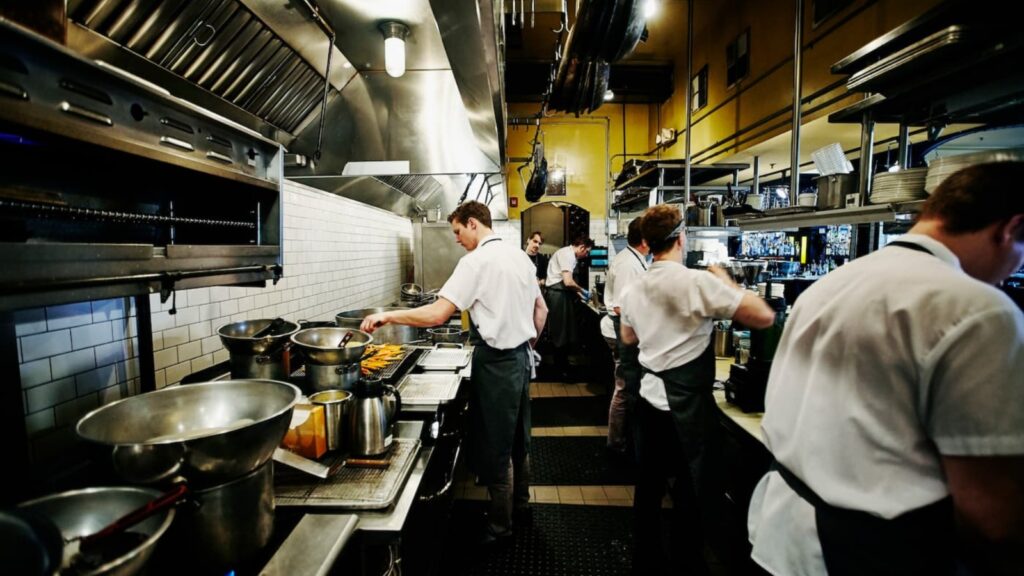
How Restaurants Cook Food Fast You walk into a restaurant, place your order, and within just a few minutes, your steaming plate of food arrives. It feels almost magical—how do they prepare everything so quickly while still keeping it tasty?
The secret lies not in rushing, but in organization, preparation, and efficiency. Restaurants are designed to deliver quality food at lightning speed without compromising on flavor. In this blog, we’ll uncover the fascinating techniques and strategies that allow restaurants to serve delicious meals so fast.
How Restaurants Cook Food Fast :Advance Preparation (Mise en Place)
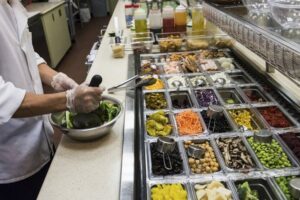
The biggest secret behind quick service is a French culinary concept called “mise en place”, which means “everything in its place.”
Before the restaurant even opens, chefs and kitchen staff:
Chop vegetables in bulk.
Marinate meats hours before.
Prepare sauces, dressings, and dips in advance.
Portion pasta, rice, and other staples.
This way, when an order comes in, the chef isn’t starting from scratch. Instead, they simply assemble and cook quickly using prepped ingredients.
👉 Example: The onions in your burger are already sliced, and the sauce is already made. All the chef has to do is grill the patty and put it together.
How Restaurants Cook Food Fast :Pre-Cooked & Par-Cooked Ingredients
Restaurants often use par-cooking (partially cooking food in advance) to save time.
Chicken may be grilled 70% and then finished off when you order.
Pasta might be boiled ahead of time and then reheated in sauce.
Fries are often blanched (partially fried) and then crisped when ordered.
By doing this, you can ensure that food tastes fresh while cutting cooking time in half.
How Restaurants Cook Food Fast : Specialized Kitchen Stations
Most restaurants have a station-based kitchen layout, meaning different chefs handle specific tasks.
Grill Station: Handles burgers, steaks, kebabs.
Fry Station: Takes care of fries, nuggets, wings.
Sauce/Sauté Station: Makes pastas, stir-fries.
Cold Station: Prepares salads, sandwiches, desserts.
This division of labor allows multiple dishes to be cooked simultaneously, reducing waiting time for customers.
High-Performance Kitchen Equipment
Commercial kitchens are equipped with heavy-duty appliances designed for speed and efficiency.
High-powered ovens: Cook faster than home ovens.
Flat-top grills: Can handle multiple patties at once.
Deep fryers: Maintain high heat for quick frying.
Blast chillers & warmers: Keep food fresh and ready.
This professional equipment ensures food is cooked evenly and quickly, unlike in a home kitchen.
Standardized Recipes & Portions
Restaurants rely on pre-designed recipes and fixed portions to save time.
Cooks don’t have to guess ingredient quantities—everything is measured in advance.
Portion sizes are controlled (e.g., exact grams of chicken for curry or sauce for pasta).
Consistency is maintained across all orders.
This not only speeds up the cooking process but also ensures customers always get the same taste.
Batch Cooking for Popular Items
For high-demand dishes, many restaurants cook in batches.
A large pot of soup, curry, or sauce is made and kept warm.
Rice, pasta, or noodles are cooked in bulk.
Grilled chicken or patties are prepped ahead of peak hours.
When orders come in, food is quickly portioned and served. This is especially common in fast food chains.
Smart Food Storage & Organization
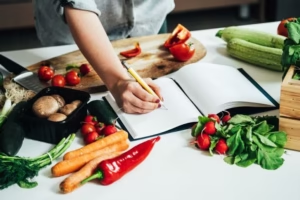
Restaurants use advanced storage systems to save time:
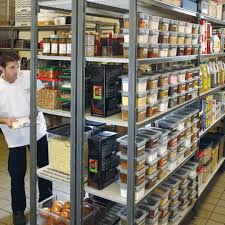
Ingredients are labeled and arranged for quick access.
Refrigerators and freezers are organized so staff can grab items immediately.
Vacuum-sealed and airtight containers extend freshness of prepped items.
This eliminates delays that usually happen in a home kitchen when you’re searching for ingredients.
How Restaurants Cook Food Fast : Trained & Efficient Staff
Behind every fast restaurant is a team of skilled chefs and helpers who are trained to work at speed.
Staff know exactly where each item is kept.
Chefs are trained to multitask (flipping burgers while stirring sauce).
Clear communication between waiters and chefs ensures no time is wasted.
👉 In fact, many fast food chains use headsets and digital screens to track orders in real time.
Technology & Automation
Modern restaurants also rely on technology for faster service:
POS systems (Point of Sale): Orders go directly to kitchen screens.
Timers & buzzers: Ensure fries or pizza are cooked perfectly every time.
Pre-programmed machines: Coffee makers, soda dispensers, and ovens work at the press of a button.
This minimizes human error and keeps the workflow smooth.
Menu Engineering
Ever noticed how fast food menus focus on a limited selection? That’s intentional.
Fewer items mean less cooking complexity.
Popular dishes share common ingredients (e.g., one sauce used in multiple dishes).
Seasonal menus keep things exciting but manageable.
By designing a smart menu, restaurants reduce cooking time while maximizing efficiency.
Food Safety & Quality Control
While speed is important, restaurants never compromise on safety. Prepped and stored food is kept under strict hygiene standards:
Ingredients are refrigerated at correct temperatures.
Cooked items are not kept beyond safe time limits.
Kitchen staff follow standard hygiene protocols.
This balance of speed + safety ensures food is both fast and safe to eat.
The Fast Food Advantage
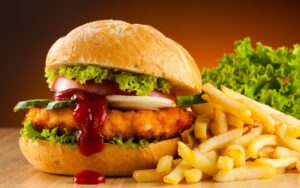
Fast food chains like McDonald’s, KFC, and Domino’s are masters of quick service. They achieve speed by:
Centralized kitchens that pre-make sauces and mixes.
Highly automated equipment (like pizza ovens or fryers).
Extremely well-trained staff who follow standardized steps.
That’s why your burger or pizza is ready in under 10 minutes.
How Restaurants Cook Food Fast :Conclusion
Restaurants aren’t cooking magic—they’re cooking smart. By using advance prep, efficient kitchen layouts, commercial equipment, trained staff, and technology, they can serve food much faster than we can at home.
The next time your meal arrives at your table in record time, you’ll know the secret: it’s not just speed, but a well-organized system that makes it possible.
So whether it’s a sizzling pizza, a plate of fries, or a gourmet pasta dish, remember—the art of quick service is all about planning, preparation, and precision
Pingback: How to Make Grilled Chicken | Easy Step-by-Step Recipe &Tips
thank you